
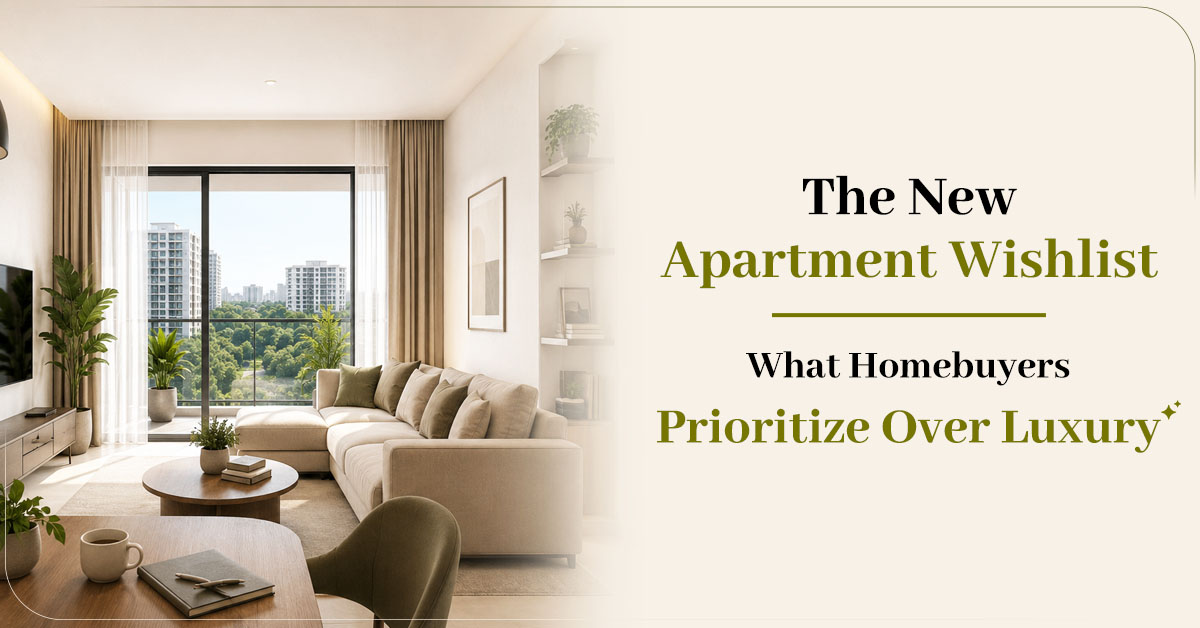
A marble lobby used to close the deal. Today it barely gets a second look. Walk through any sales gallery in Chennai, and you’ll notice the questions have changed: not “How grand is the entrance?” but “How’s the ventilation?” and “What’s the water situation?” “How far is the nearest metro?” Even site visits look different now, with buyers turning up holding a checklist on their phone instead of just admiring the model flat. Modern apartments are being judged on a completely different scorecard now, and homebuyer prioritieshave shifted toward things that actually affect daily life rather than things that look good in a brochure photo. If you’re hunting for apartments for sale in Velachery or anywhere else in the city, it helps to know what’s actually driving decisions in 2026, because it usually isn’t the chandelier in the lobby.
Luxury Hasn’t Disappeared, It’s Just Not Leading Anymore
Nobody is rejecting nice finishes. Buyers still appreciate a well-designed lobby, a clean facade, good fittings. But luxury has quietly slid down the list of deciding factors, replaced by things that are harder to fake and far more important day to day.
Ask any recent buyer what made them choose their flat, and the answer rarely starts with “the marble.” It usually starts with something more practical:
- How much natural light the apartment actually gets
- Whether the commute to work or school is realistic, not theoretical
- How the building handles water supply and power cuts
- Whether the maintenance team responds when something breaks
- How safe the neighborhood feels after dark
These aren’t glamorous concerns. They’re the kind of thing you only notice when they’re missing, and by then you’ve already signed the sale deed.
What Today’s Buyers Actually Look Like on Paper
If you sat down and mapped out homebuyer priorities in any major Indian city right now, luxury finishes would show up somewhere in the middle of the list, not at the top. Instead, a mix of practical and emotional factors has pulled ahead, getting far more attention than they did five years ago.
A few patterns show up again and again in buyer conversations:
- Connectivity over square footage. A smaller flat near a metro line or IT corridor often wins over a bigger one stuck in traffic for two hours a day.
- Health and wellness features. Walking tracks, decent ventilation, and outdoor green space matter more after the past few years made everyone rethink indoor living.
- Work-from-home readiness. A spare room or balcony that can double as a workspace has gone from a nice extra to something buyers actively ask about.
- Community feel. People want neighbors they recognize, not a building full of strangers who happen to share a lift.
None of this is about giving up comfort. It’s about redefining what comfort means when half your life now happens inside the four walls of your apartment, not just the eight hours you sleep there.
Why Homebuyers Preferences Have Shifted So Quickly
A few years of remote work, rising commute fatigue, and tighter household budgets changed how people think about where they live. Homebuyers’ preferences didn’t shift overnight by accident. They shifted because the apartment stopped being just a place to sleep and started being the office, the gym, the school, and occasionally the restaurant too.
Some of the bigger forces behind the change:
- Remote and hybrid work made location flexibility less important than livability at home
- Rising fuel and time costs made commute distance a financial decision, not just a convenience one
- More dual-income households mean less time for upkeep, pushing maintenance quality up the list
- Younger buyers research more online before visiting a site, so they arrive already skeptical of glossy marketing
This is why a project with an average lobby but excellent connectivity, ventilation, and management can outsell a flashier one two streets away. Buyers have simply gotten sharper about separating what looks impressive from what actually works.
The Apartment Lifestyle Benefits That Matter Most Right Now
When buyers talk aboutapartment lifestyle benefits today, they mean something fairly specific. It’s less about a rooftop infinity pool and more about whether daily life inside the community is actually pleasant.
The features coming up most often in buyer feedback:
- Reliable security with visible staff, not just a camera on a wall
- Genuinely usable common spaces, like a park where kids actually play, not a manicured patch nobody visits
- Low-friction maintenance, where a complaint gets resolved in days, not weeks
- Walkability within the layout itself, so a trip to the gate doesn’t feel like a hike
- A sense that the builder is still around after possession, not gone the moment the keys are handed over
These are the things that tend to matter more in the second and third year of living somewhere, which is exactly when buyer satisfaction either holds steady or quietly falls apart. A beautiful entrance gives a great first impression. Good management gives you a great fifth year.
How This Plays Out in Chennai’s Apartment Market
Chennai’s buyers have become particularly sharp about this shift, partly because the city’s infrastructure growth has been so uneven across neighborhoods. A flat near a developing IT corridor with decent connectivity now competes seriously against a flat in an older, more established area with a fancier lobby. Five years ago that comparison wouldn’t have been close. Today it often comes down to a coin toss, and sometimes the newer corridor wins outright because the daily commute math simply works better.
This is visible in how demand is spreading across the city. Areas with strong transit links, active social infrastructure, and steady appreciation are pulling ahead of locations that only had visual appeal going for them. Buyers comparing options across established residential pockets are weighing connectivity and everyday convenience just as heavily as the apartment specs themselves, sometimes more so.
Developers who’ve picked up on this are designing differently. Floor plans now prioritize cross ventilation over square footage on paper. Amenities are chosen based on actual usage data from past projects, not just what sounds good in a brochure. And increasingly, builders are investing in management quality after handover, because that’s where word-of-mouth reputation is won or lost.
What IYRA Developers Builds Around This Shift
IYRA Developers has leaned into this change rather than fighting it. Projects are planned around real connectivity, livable layouts, and dependable post-handover support, the things buyers actually mention when asked why they chose a particular flat. Conversations with existing IYRA residents tend to circle back to the same points: responsive maintenance, well-managed common areas, and locations chosen with genuine commute patterns in mind rather than just land prices. That approach lines up closely with where the city’s apartment market is headed, and it’s part of why repeat buyers and referrals make up a meaningful share of new bookings.
What This Means If You’re Buying Right Now
If you’re house-hunting this year, it’s worth rethinking your own checklist before you start touring properties. Ask less about the lobby and more about the building’s track record on maintenance response times. Ask about actual commute durations at peak hours, not distance on a map. Visit during the day and in the evening, since a project can look completely different depending on when you see it.
The buyers who end up happiest with their purchase aren’t usually the ones who chose the most luxurious-looking flat. They’re the ones who asked sharper questions and matched the apartment to how they actually live, not how a brochure imagined they might live. Whether you’re weighing a newer corridor or a settled, well-connected pocket like apartments in T Nagar, the same rule holds: modern apartments are getting better precisely because buyers have started demanding substance over surface, and that’s a shift worth paying attention to before you sign anything.
Share This
Other Post
No related posts found.